 Ahmed Al Mansoori
Cloud VPS hosting has quietly become one of the most practical infrastructure decisions a growing business can make. Cloud VPS hosting offers a balance between the affordability of shared hosting and the high performance of a dedicated server, giving teams dedicated resources at a fraction of what that level of performance would normally cost. Traffic spikes don’t send anyone scrambling for support, because capacity scales in minutes rather than days. That shift in expectations has pushed every cloud hosting provider to compete harder on speed, security, and genuine flexibility, not just marketing copy.
What used to be a decision reserved for large enterprises now gets weighed by solo developers and established agencies alike, often before a single line of code gets written. In this post, we’ll walk through the top cloud VPS providers actually shaping this space in 2026, look at what separates reliable infrastructure from a platform that just looks appealing on a pricing page, and share where we at MilesWeb fit into that picture.
Table Of Content
What Is Cloud VPS Hosting?
A cloud VPS, or virtual private server, gives you a dedicated segment of computing resources on shared physical hardware, spread across a broader cloud infrastructure rather than one single machine. Each instance runs its own operating system with full root access and a fixed resource allocation, so performance stays predictable even when a neighboring workload spikes. Whether you’re comparing a cloud VPS host based overseas or exploring one closer to home, this type of service is the baseline architecture you’re actually paying for.
Compared to traditional shared hosting, that’s a serious jump in control. Compared to a fully dedicated server, it costs a fraction of the price. Because the underlying architecture typically spans multiple physical nodes, a hardware failure on one machine rarely takes your instance down with it — something the older single-server VPS model could never promise.
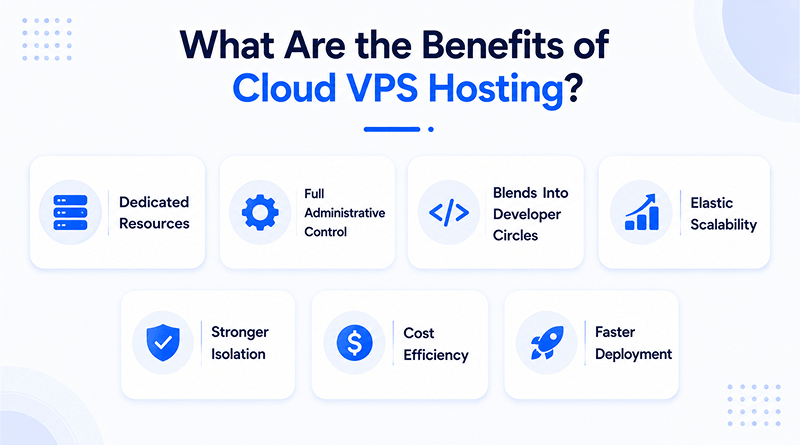
What Are the Benefits of Cloud VPS Hosting?
A capable VPS platform delivers real value well beyond raw compute power:
Related Read: Best Free Cloud Hosting Provider
What Are the Top 5 Cloud VPS Providers in 2026?
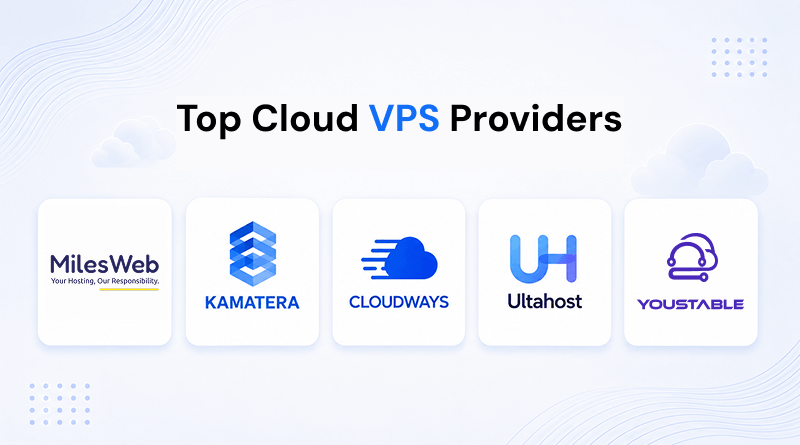
The market has no shortage of options, but only a handful combine strong infrastructure with genuinely responsive support. These five providers represent a genuine mix of specialists and global names worth evaluating if you’re looking for the best cloud VPS providers for a growing workload.
1. MilesWeb
At MilesWeb, we built our cloud VPS stack around NVMe storage, KVM virtualization, and a network designed for low latency across regional data centers. Full root access comes standard, along with a choice of Linux hosting distributions, Windows VPS environments, and control panels, plus the kind of granular resource control that many budget providers hold back. Auto-scaling, dedicated IP options, and enterprise-grade DDoS protection come with every plan instead of being locked behind a pricier tier — exactly the depth we think developers deserve from day one
Key highlights
- NVMe SSD storage with KVM-based virtualization
- Full root access with instant provisioning
- Free website migration and 24/7 technical support
- Choice of Linux hosting and Windows VPS environments
- Built-in DDoS protection and automated backups
- Flexible scaling without downtime during upgrades
2. Kamatera
Kamatera leans into flexibility more than any name on this list, letting teams build a server spec from scratch instead of picking from a handful of fixed tiers. You pay for what you actually use, and a 30-day trial means teams can put real workloads through their paces before committing any budget. Data centers sit across North America, Europe, and Asia too, so businesses needing infrastructure in a specific region aren’t stuck with whatever happens to be nearby.
Key highlights
- Fully customizable server specs (CPU, RAM, disk)
- Pay-as-you-go pricing with a 30-day free trial
- 20+ data centers across multiple continents
- Enterprise-grade infrastructure with high uptime SLAs
- API and automation tools for scaling
- 24/7 support across regions
3. Cloudways
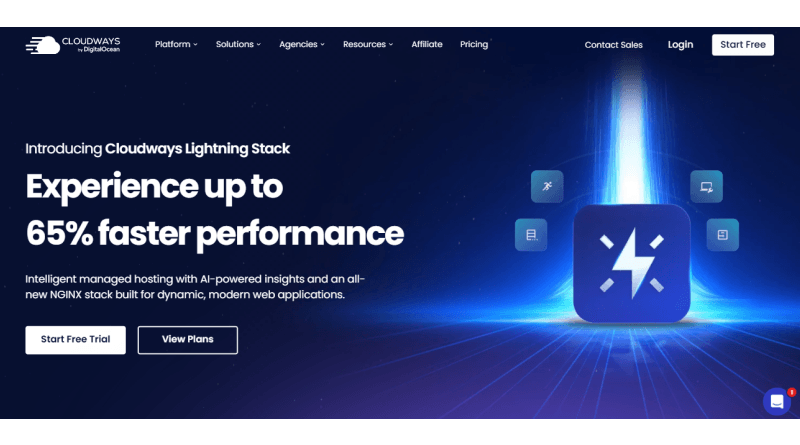
Cloudways operates as a managed layer installed on top of infrastructure from providers like DigitalOcean, AWS, and Google Cloud. This makes it a good fit for businesses that want cloud-grade performance but would rather not touch server administration directly. The dashboard hides most of the underlying complexity, and it configures caching plus SSL security out of the box for most application types. That hands-off setup makes it a natural pick for agencies managing several client websites, who’d rather spend their hours on client work than server upkeep.
Key highlights
- Managed VPS with automated server optimization
- Built-in caching layers for faster load times
- One-click staging environments
- 24/7 expert support with proactive monitoring
- Pay-as-you-go billing across multiple cloud backends
- Free SSL and automated backups included
4. Ultahost
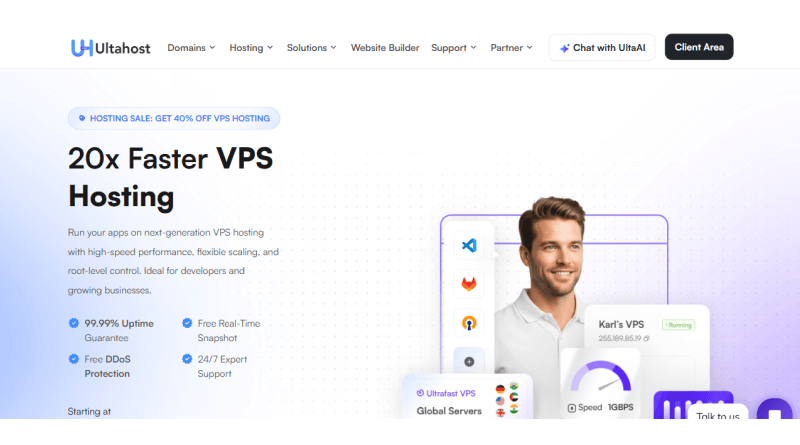
Ultahost pitches itself as a well-rounded option for small and mid-sized teams, bundling NVMe storage, LiteSpeed server tech, and free daily backups into most VPS tiers without pushing them behind an add-on menu. Real-time snapshot restores mean a disastrous deployment doesn’t turn into a lost afternoon, and its data center list stretches across multiple regions, UAE included, which is relevant for businesses serving Gulf-based traffic specifically. Support runs through live chat around the clock, and onboarding stays simple enough for non-technical founders to get a server running without much hand-holding.
Key highlights
- NVMe storage with LiteSpeed web server
- Free daily backups with real-time snapshot restore
- Data centers spanning multiple regions, including the UAE
- 24/7 live chat support
- cPanel and DirectAdmin panel options
- Simple onboarding for non-technical users
5. YouStable
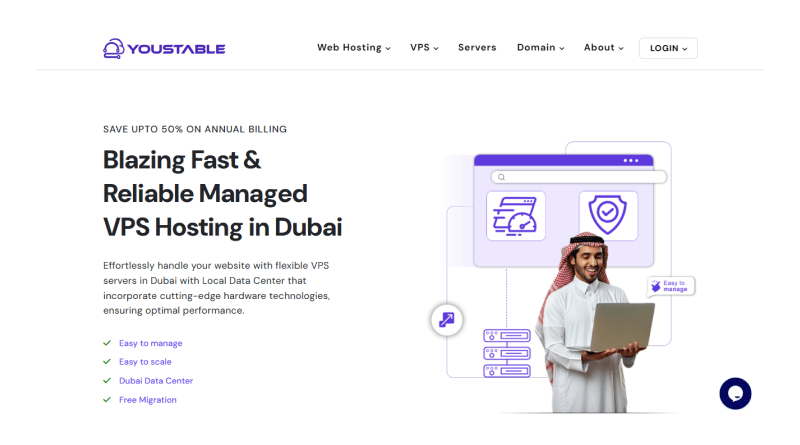
Youstable charges less than most, and you still get NVMe storage plus LiteSpeed caching on every single plan, the cheapest tier included. Every tier gets NVMe storage and LiteSpeed caching, not just the expensive ones. DDoS protection works the same way: it’s included, not something you unlock by paying more. Data centers cover the UAE as well, keeping latency low for regional traffic, and the pricing usually beats bigger names without giving up much on uptime.
Key highlights
- Every tier gets NVMe storage and LiteSpeed caching, no exceptions
- DDoS protection comes with the plan, not sold as an extra
- Data centers cover the UAE plus several other regions
- Prices undercut most of the bigger names
- 99.9% uptime, backed by an actual commitment
- Control panel simple enough for first-timers
Top Cloud VPS Providers: Quick Comparison
Comparing five providers isn’t a quick scan — the details matter. This table breaks down storage, management, and support side by side so you can weigh them properly.
| Provider | Storage | Management | Support | Best For |
|---|---|---|---|---|

|
NVMe SSD | Full root | 24/7 help desk | Hands-on developers |

|
SSD | Custom specs | Always-on support | Niche configs |

|
Varies by backend | Fully managed | 24/7 expert support | Hands-off agencies |

|
NVMe SSD | Self-managed | Live chat | Fast recovery needs |

|
NVMe SSD | Self-managed | Live chat | Budget-conscious teams |
Cloud VPS vs Shared Hosting vs Dedicated Server: Which Do You Need?
Small, low-traffic sites work fine on shared hosting. It splits server resources across many users, which is exactly why it’s cheap. Shared hosting is typically the first choice for individuals testing an idea rather than scaling an existing one; it resembles free web hosting in practice, even if the plan technically carries a small cost.
A dedicated server sits at the opposite end, handing an entire physical machine to a single client along with maximum performance and the highest price tag in the lineup. It’s built for workloads that genuinely need every ounce of that isolation.
Cloud VPS occupies the practical middle ground, delivering isolated resources and root access at a cost that suits growing businesses without the overhead of managing physical hardware. E-commerce platforms, SaaS applications, and agencies running multiple client websites are common examples of where shared hosting becomes a bottleneck fast and a dedicated server ends up being more than what’s actually needed, leaving VPS as the natural landing spot.
Related Read: Top WooCommerce Hosting Providers
How Do You Choose a Cloud VPS Provider?
Pricing pages often fail to provide a complete picture. A cheap plan now doesn’t mean cheap later, since traffic grows, demand shifts, and pricing tiers catch up fast. It’s worth taking the time to explore a few things before committing to anything long-term.
The budget’s the obvious starting point—line it up against what you actually need right now, not some hypothetical future capacity. Next, find out where the data centers physically are; that matters a lot if compliance or data residency rules apply to you. Then there’s the in-house question: can your team realistically handle server administration themselves, or does a managed plan make more sense long-term?
Upgrades are also worth considering — some providers scale resources without any downtime, while others require an outage for growth. And keep the security basics in mind too, including firewalls, DDoS protection, and how often backups actually happen. Finally, test support response times before you commit. Infrastructure issues often arise unexpectedly outside of business hours.
Closing Insights
Cloud VPS hosting isn’t a niche technical choice anymore—it’s standard practice now, something teams plan for early instead of scrambling to fix once traffic outgrows a shared plan. The providers we’ve covered here each offer alternatives, and this variety is genuinely useful because the right fit depends on your business’s current stage, rather than on whichever name appears first in a search result.
MilesWeb was built on a simple principle: you shouldn’t have to choose between technical depth and reliability or pay extra to get protections that should be standard anyway. NVMe speed, real root access, and enterprise-grade security come with every plan from the start, not as an upsell.
The goal is infrastructure that just works quietly in the background, so you can focus on building the business.
Frequently Asked Questions
1. What is cloud VPS hosting?
It’s a virtual server that gets its own dedicated portion of CPU, RAM, and storage on hardware shared across a broader cloud network, rather than one physical box. You get full root access and predictable performance, but at a fraction of what a fully dedicated server would cost.
2. Is cloud VPS better than shared hosting?
For anything beyond a small, low-traffic site, yes. Shared hosting splits server resources across many users, and a traffic spike on someone else’s site slows yours down too. Cloud VPS gives you resources that are yours alone, which means steadier performance and more control over how the server is set up.
3. Which cloud VPS provider has data centers in Dubai?
Several providers on this list maintain infrastructure in Dubai specifically, including MilesWeb, Ultahost, and Youstable, which all list UAE-based data centers among their regions. Kamatera and Cloudways route through partner infrastructure that may include the region depending on the plan, so it’s worth confirming the exact data center location before signing up if Dubai-based latency is relevant for your project.
4. Is cloud VPS hosting good for UAE-based businesses?
Mostly yes. UAE businesses tend to juggle both regional and international traffic, and cloud VPS handles that mix well: scale up for a launch or campaign and scale back down once it settles; no dedicated-server price tag is required. Pick a provider with a Dubai-based data center; MilesWeb, Ultahost, and Youstable all qualify, and load times stay fast for customers in the region too.